
rTMS in Berlin: Outpatient Treatment for Depression
Repetitive Transcranial Magnetic Stimulation – outpatient, specialist-led, short-notice appointments
Repetitive transcranial magnetic stimulation (rTMS) is a non-invasive treatment for depression. Targeted magnetic pulses stimulate brain regions that are underactive in depressive disorders. The treatment is listed in the German S3 guideline for unipolar depression as a therapeutic option – particularly when medication is insufficient or not well tolerated.
Psychodynamik Berlin offers rTMS as an outpatient treatment at a specialist psychiatric practice in Berlin-Neukölln. Unlike inpatient or day-clinic settings, no hospital stay is required – patients come to the practice for each session and continue their daily routine afterwards.
Who is rTMS suitable for?
Treatment process
Initial consultation
Indication assessment, informed consent, discussion of treatment goals. Clarification of coverage with your health insurance provider.
Treatment course
Typically 20 sessions over 4 weeks (Monday–Thursday). Each session takes approximately 30 minutes, with the stimulation itself lasting about 3 minutes in the iTBS protocol. If you respond well, extending the course may be clinically indicated – up to 30 sessions are supported by current evidence.
Progress monitoring
Regular assessment of treatment response using standardised questionnaires. Adjustment of the treatment plan if needed.
Completion
Evaluation, recommendations for next steps, and planning of maintenance treatment if indicated.
Technology and protocol
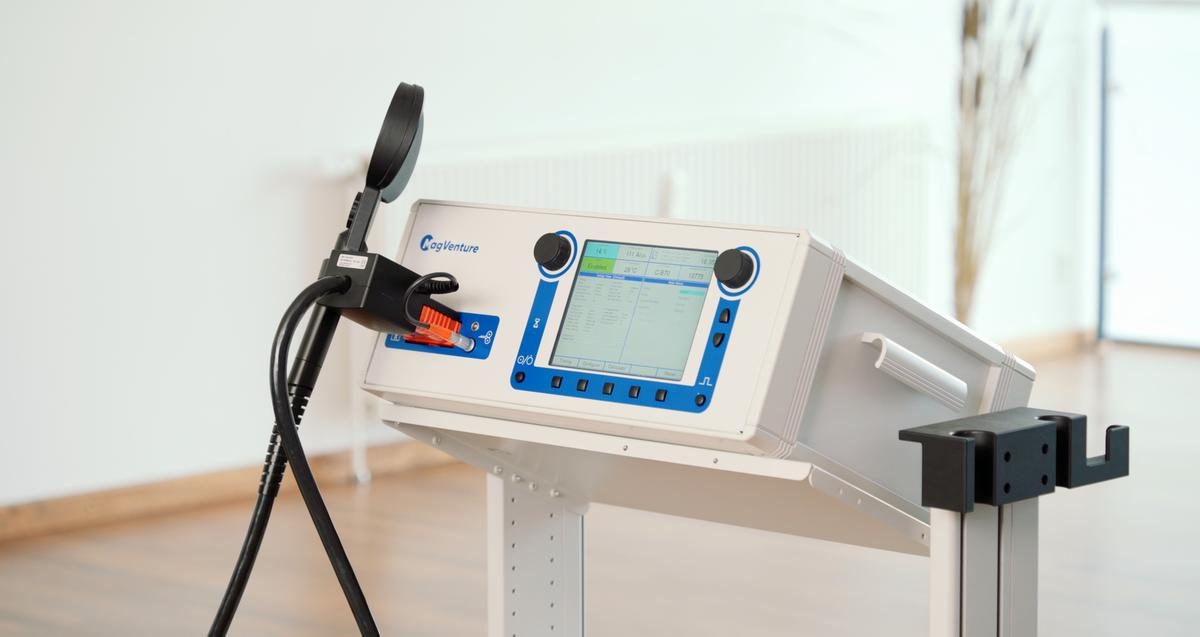
MagVenture MagPro R30 with Cool-B70 coil
We use a system of Danish manufacture that is well established in clinical and research settings. Active cooling of the Cool-B70 coil allows extended treatment courses while maintaining consistent stimulation quality.
- Protocol: iTBS (intermittent Theta Burst Stimulation)
- Stimulation time: approx. 3 minutes per session
- Target region: left dorsolateral prefrontal cortex
- Frequency: 5 sessions per week over 4 weeks
- Regulatory status: CE-certified for the treatment of major depression
The iTBS protocol reduces stimulation time to approximately 3 minutes. Older 10 Hz protocols took around 37 minutes per session. The shorter protocol integrates more easily into everyday life – a complete treatment unit including preparation takes about 30 minutes.
Tolerability and side effects
rTMS is generally well tolerated. The most common side effect is mild headache during the first few sessions, which typically resolves on its own. A light tapping sensation on the scalp during stimulation is normal.
Serious side effects are rare. Before starting treatment, we review potential contraindications during the initial consultation – in particular increased seizure risk, metallic implants in the head region, or pregnancy.
Costs and coverage
Treatment is billed according to the German physicians' fee schedule (GOÄ). Most private health insurance providers cover the cost; we recommend clarifying coverage with your insurer in advance.
On request, we provide a detailed cost estimate with clinical justification before treatment begins, which you can submit to your insurance provider. Self-pay patients are welcome.
Frequently asked questions about rTMS
How much does rTMS treatment cost in Berlin?
rTMS is billed according to the German physicians' fee schedule (GOÄ). A standard treatment course consists of 20 sessions over 4 weeks; if you respond well, an extension may be advisable. On request, we provide a detailed cost estimate before treatment that you can submit to your health insurance provider.
Does health insurance cover rTMS?
Outpatient rTMS is currently not reimbursed by statutory German health insurance (GKV). Most private health insurance providers (PKV) cover the cost – we recommend checking with your insurer beforehand.
How long does an rTMS session take?
A session lasts approximately 30 minutes including preparation. The stimulation itself with the iTBS protocol takes about 3 minutes. This is significantly shorter than older 10 Hz protocols, which require around 37 minutes of stimulation.
Is rTMS painful?
No. During stimulation, you may feel a light tapping sensation on your scalp. The most common side effect is mild headache after the first few sessions, which typically resolves on its own.
How quickly can I get an appointment?
Initial consultations are usually available within a few days. Appointments can be booked online via Doctolib.
Who carries out the treatment?
Dr. Jochen Stappert, specialist in psychiatry and psychotherapy, is responsible for indication assessment and medical supervision. Stimulation sessions are carried out by trained practice staff under medical supervision.
Can I continue taking my medication during rTMS?
Yes. rTMS is usually administered alongside ongoing medication. Any changes to your medication are discussed individually during the initial consultation.
Is treatment available in English?
Yes. Diagnostics, informed consent and treatment can all be conducted in English.